
Oregon Capitol – Week Three and First Walk-Out!
Posted by Pam Leavitt on February 19, 2026
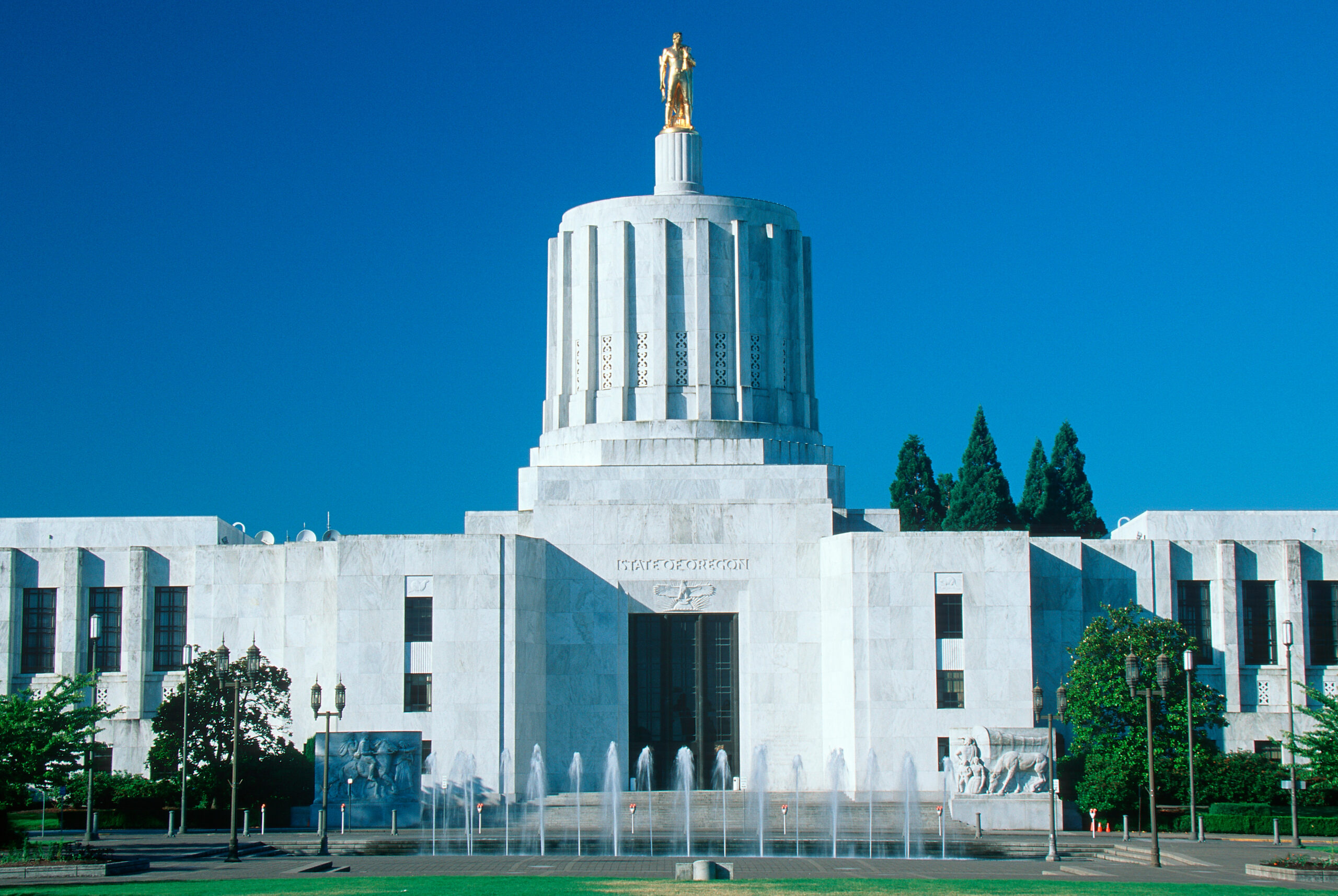
Last Saturday on Valentine’s Day, Oregon celebrated its 167th birthday. It became the 33rd state in the union when President James Buchanan signed the act on Feb. 14, 1859. Coinciding with Valentine’s Day, it’s an opportunity to reflect on how much we love the state we call home.
On Monday, we reached the first deadline in the Oregon Capitol. The session is running full speed ahead as we inch forward to each deadline. Monday, Feb 16, was the deadline to have a work session in committee for a bill. After that, the committee “works” a bill during a work session, where the bill is ideally passed out of committee. This is also where committees adopt amendments. If a bill was NOT “posted,” the bill was dead. A bill would have to be headed to the House or Senate floor or a few other special committees that don’t have deadlines (like Rules, Revenue, or Ways and Means) to be considered alive.
On Wednesday, Senate Republicans boycotted the floor session — successfuly blocking action on a bill to move up the statewide vote on the transportation tax from the November to the May ballot. They returned to the floor on Thursday.
The February 4th revenue forecast delivered unexpectedly positive news, projecting approximately $285 million more than previously anticipated due to lower-than-expected state spending in the 2023–25 biennium and stronger corporate profits. At the same time, revenue leaders advanced a plan to address the ongoing revenue disconnect by decoupling Oregon from three tax breaks included in President Trump’s One Big Beautiful Bill. The affected federal provisions include tax breaks on interest from car loans, capital gains from stock sales, and bonus depreciation for business equipment, positioning the disconnect as a central policy lever as lawmakers recalibrate budget decisions in light of the improved forecast. This “disconnect” bill is one of the most controversial of the session.
2026 Legislation
Here is a summary of the bills we are tracking in this session and the status of the bill in the session:
HB4170 – The “penny bill”
This bill allows a place of accommodation offering goods or services to adopt a rounding policy under which the final digit of the total amount due or remaining due in certain in-person transactions will be rounded to the nearest five-cent increment. GoWest Credit Union Association provided testimony in support because it would provide clarity to consumers. From our testimony, “Credit unions rely on steady access to coins to serve members who continue to use cash for daily transactions. As penny inventories decline, the closure or consolidation of coin distribution sites will disproportionately affect rural communities, small business, and lower income consumers. Credit unions care about the penny circulation issue because it directly affects how they handle cash transactions, serve members, and manage operational risk and cost.”
HB4116 – Consumer Loans, Rep. Nathan Sosa
The measure would stop state financial institutions established in states outside of Oregon from being able to rely on their home state laws when determining an allowable interest rate. Currently, federal law allows state banks to use the rate caps from the states that are registered in when doing business in Oregon. HB 4116 gives authority to Oregon to opt out of the federal law that creates this preemption, allowing Oregon to enforce its own rate cap. The sponsors of the bill argued that these companies are using a loophole in federal law to bypass our state’s interest-rate cap of 36%. They are lending to consumers at interest rates of 73% – 200%. This bill passed out of Committee on a 6-4 partisan vote and will be heard on the House floor.
HB4136 – Mortgage Interest Deduction on Second Homes, Rep. Annessa Hartman, Senator Jeff Golden
The bill disallows, for purposes of personal income taxation, a mortgage interest deduction for a residence other than the taxpayer’s principal residence, unless the taxpayer sells the residence or actively markets the residence for sale. This bill had a hearing in the House Revenue Committee on Monday. This Committee remains open and could come up at anytime during the session.
HB4141 – Debt Resolution Companies, Rep. Breese-Iverson
Requires a person that provides debt resolution services to consumers in this state to register with the Department of Consumer and Business Services and regulates the activities of debt resolution service providers. In 2009, Oregon passed a bill that established a 7.5% rate cap for debt resolution companies. The 7.5% fee cap applies to the percentage of savings that the consumer achieves through debt resolution. This bill will change that cap and allow debt resolution companies to come back to Oregon and be regulated. This bill had a hearing but “died” in Committee. We expect to see it during the 2027 legislative session.
HB4051- First-Time Homeownership, Rep. Werner Reschke
The bill creates a program for deferred loans to first-time home buyers in an amount not greater than the lesser of the closing costs on the purchase or one percent of the purchase price. An informational hearing is scheduled later this week.
HB4052 – Incentive Tax for Creation of State Bank, Rep. Werner Reschke
The bill creates a corporate income tax credit for Oregon-chartered banks that are new to the state and applies to banks first authorized to conduct business in Oregon and commencing business during the current tax year or the two prior tax years. The bill does not include banks formed by merger or conversion that has filed an Oregon tax return in a previous year and sets the amount of the credit at amount of tax due up to $1 million. A public hearing and vote was held and passed out of the House Revenue Committee.
HB4026 –Committee Bill in House Commerce and Consumer Protection
This bill is a typical placeholder bill that states, “requires the Department of Consumer and Business Services to study consumer protection.” This is a typical bill we watch closely until the end of the session to see what the Chair or leadership might want to place within the bill.
HB4128 – Relating to Single-Family Residences, Rep. Ben Bowman, Sen. Lew Frederick
Prohibits covered entities, which is defined as “real estate investor” from purchasing, acquiring, or offering to purchase or acquire a single-family residence unless the residence has been listed for sale to the general public for at least 90 days.
HB4098 – Regulating Insurance under the Unlawful Trade Practices Act
The measure designates certain insurance practices as unlawful trade practices under Oregon’s Unlawful Trade Practices Act (UTPA). The UTPA, enacted in 1971, is one tool consumers may use to recover damages resulting from deceptive sales or business practices. It provides individuals with a right of private action for deceptive practices in the sale of real estate, goods, or services. The bill failed on the House floor but it is expected to be brought up again this week.
This is a short summary of all the bills we are tracking on behalf of credit unions. For any questions, please reach out to Pam Leavitt at [email protected].
Posted in Advocacy on the Move, Oregon Advocacy.














Brittanie Bonanzino
AVP, Communications
Washington
Phone: 509.218.1192
Toll-free: 800.995.9064

Alyse Knudsen
Manager, Communications
Oregon
Phone: 971.450.5660
Toll-free: 800.995.9064

Madlynn Schreibvogel
VP, Public Relations
Colorado
Phone: 303.513.3765
Toll-free: 800.995.9064